
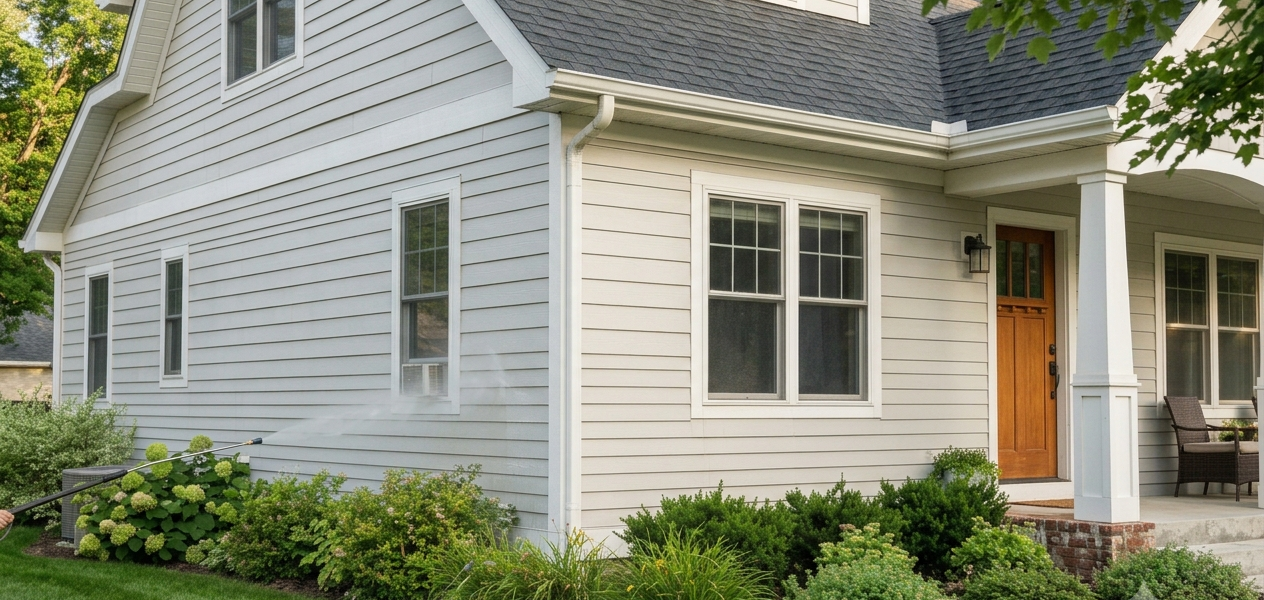
Soft wash cleaning is a low-pressure exterior cleaning method that safely removes mold, algae, mildew, bacteria, dirt, and other organic stains using specialized cleaning solutions. It delivers longer-lasting results than pressure washing for many delicate surfaces while helping protect your home’s exterior from unnecessary damage.
What Is Soft Wash Cleaning?
Soft wash cleaning is an exterior cleaning process that combines low-pressure water with specially formulated cleaning solutions to eliminate organic growth and stubborn surface contaminants. Unlike traditional high-pressure washing, this method treats the source of stains rather than simply blasting away visible dirt.
The cleaning solution breaks down mold, mildew, algae, moss, bacteria, pollen, and grime before they are gently rinsed away. Because the pressure is similar to that of a standard garden hose, soft washing is suitable for many surfaces that could be damaged by high-pressure equipment.
Why More Homeowners Choose Soft Wash Cleaning
Many homeowners prefer soft wash cleaning because it offers a safer and more effective way to maintain exterior surfaces. Instead of relying on force, the process uses cleaning chemistry to remove contaminants at their roots.
This approach not only improves appearance but also helps prevent rapid regrowth of algae, mold, and mildew. As a result, homes often stay cleaner for a longer period, reducing the need for frequent exterior cleaning.
Soft Wash Removes Organic Growth More Effectively
One of the biggest benefits of soft wash cleaning is its ability to eliminate living organisms instead of only washing away surface stains.
Dark streaks on roofs, green patches on siding, and black mildew around gutters are usually caused by biological growth. Soft washing destroys these organisms, helping prevent them from returning quickly. This creates a cleaner exterior that lasts much longer than cleaning methods focused only on water pressure.
Helps Protect Delicate Exterior Surfaces
Many exterior building materials can be damaged by excessive pressure. Vinyl siding, painted wood, stucco, cedar shakes, composite panels, and roofing shingles all benefit from gentler cleaning methods.
Soft wash cleaning reduces the risk of cracked siding, chipped paint, loosened shingles, water intrusion, and premature surface wear. This makes it an excellent choice for preserving the condition and appearance of your home.
Extends the Life of Exterior Materials
Organic growth slowly breaks down many exterior materials if left untreated. Mold, algae, moss, and mildew retain moisture that can contribute to deterioration over time.
Regular soft washing removes these harmful contaminants before they cause long-term problems. By keeping surfaces cleaner and healthier, homeowners can often extend the lifespan of siding, roofing, fences, decks, and other exterior features while reducing future repair costs.
Improves Your Home’s Curb Appeal
A clean exterior creates a strong first impression. Dirt, algae stains, mildew, and weather-related discoloration can make even a well-maintained property appear neglected.
Soft wash cleaning restores a brighter, fresher appearance by removing years of accumulated grime. The result is a home that looks well cared for without the risks associated with aggressive pressure washing.
Creates Longer-Lasting Cleaning Results
One reason many property owners choose soft washing is that the results often last significantly longer than traditional pressure washing.
Because the cleaning solution kills mold spores, algae, bacteria, and mildew at their source, new growth develops much more slowly. This means fewer cleanings throughout the year and lower long-term maintenance requirements.
Environmentally Responsible When Performed Correctly
Professional soft wash systems use carefully diluted cleaning solutions that target biological growth while minimizing environmental impact when applied and rinsed properly.
Because contaminants are chemically treated before rinsing, the process often requires less water than repeated high-pressure cleaning. Responsible application techniques also help protect nearby landscaping and surrounding outdoor areas.
Safer for Roof Cleaning
Roof cleaning is one of the most common uses for soft washing. Asphalt shingles are designed to shed water, but excessive pressure can remove protective granules that help shield the roof from weather and sunlight.
Soft wash roof cleaning safely removes algae, moss, lichen, and black streaks without causing unnecessary wear. This helps preserve both the appearance and performance of the roofing system.
Reduces Allergens Around the Home
Exterior surfaces collect pollen, mold spores, mildew, dust, and other airborne particles that may affect outdoor living spaces.
Soft wash cleaning removes many of these contaminants, creating a cleaner environment around patios, entryways, decks, porches, and outdoor gathering areas. While it is not a substitute for medical treatment, maintaining cleaner surfaces may contribute to a healthier outdoor environment.
Saves Money Through Preventive Maintenance
Ignoring exterior buildup often leads to more expensive repairs later. Mold and algae can contribute to wood rot, paint failure, roof deterioration, and surface staining that becomes increasingly difficult to remove.
Routine soft washing is a form of preventive maintenance that helps preserve exterior materials before costly damage develops. Investing in regular cleaning can reduce future maintenance expenses while protecting your property’s value.
Soft Wash vs Pressure Washing
Although both cleaning methods improve exterior appearance, they serve different purposes.
Soft washing focuses on removing organic growth using specialized cleaning solutions and low pressure, making it ideal for delicate materials. Pressure washing relies primarily on high-pressure water to remove dirt, mud, grease, and surface debris from durable surfaces such as concrete, brick, and stone.
Choosing the right method depends on the material being cleaned and the type of contamination present.
Surfaces That Benefit from Soft Wash Cleaning
Soft wash cleaning is suitable for a wide variety of residential exterior surfaces. It is commonly used on roofs, vinyl siding, painted wood, stucco, fiber cement siding, gutters, soffits, fascia boards, fences, decks, screened enclosures, outdoor furniture, and many other areas where gentle but effective cleaning is needed.
Using the proper cleaning method for each surface helps achieve better results while reducing the risk of damage.
When Should You Schedule Soft Wash Cleaning?
The ideal cleaning schedule depends on climate, surrounding vegetation, moisture levels, and how quickly organic growth develops.
Homes located in humid environments or areas with heavy tree coverage often benefit from more frequent cleaning because mold, algae, and mildew thrive in damp conditions. Regular inspections can help determine the best maintenance schedule before staining becomes severe.
Is Soft Wash Cleaning Worth It?
For many homeowners, soft wash cleaning provides an excellent balance of safety, effectiveness, and long-lasting results. It removes harmful biological growth while helping protect exterior materials from unnecessary wear caused by excessive pressure.
When used on appropriate surfaces, soft washing not only improves curb appeal but also supports long-term home maintenance by reducing organic buildup and helping preserve exterior finishes for years to come.